Category: home-maintenance

  • Fall Is Here: Preparing Your Home for the Season Ahead

    Fall Is Here: Preparing Your Home for the Season Ahead

    Fall in Vermont is easy to appreciate. The air cools, the leaves change, and the landscape begins its transition toward winter.

    But your home is undergoing a transition of its own.

    A house is not simply a collection of materials assembled into walls, floors, and a roof. It is a system operating within another system: the environment. Temperature, moisture, air pressure, wind, precipitation, sunlight, and soil conditions are constantly acting on the building.

    For much of the year, these forces change gradually enough that we barely notice them. Fall is different.

    As outdoor temperatures begin to drop, the difference between the interior and exterior environment grows. Heating systems return to service. Materials contract. Indoor air becomes warmer relative to exterior surfaces. Rain gives way to frost, snow, and eventually repeated freeze-thaw cycles.

    In other words, the conditions under which your home operates are changing.

    That makes fall one of the best times of year to pay attention.

    Water Is Usually the Place to Start

    If there is one principle worth remembering about buildings, it is this: water eventually finds the weak point.

    It does not need a large opening.

    A small flashing defect, an overflowing gutter, a poorly directed downspout, or a low area beside the foundation may allow only a modest amount of water to move where it should not. But buildings experience weather repeatedly. Small failures, repeated often enough, become larger ones.

    Before winter, take a walk around the house during or shortly after rainfall.

    Look at where water goes.

    Are the gutters carrying water to the downspouts? Do the downspouts discharge away from the foundation? Is water collecting beside the house? Are there areas where roof runoff is concentrated?

    These observations are often more useful than simply asking whether the house has ever had a water problem.

    Water follows gravity, pressure differences, surface tension, and available pathways. If those pathways lead toward the building, eventually the building will be tested.

    Fall maintenance should include clearing leaves and debris from gutters, confirming that downspouts remain connected and properly directed, and checking grading around the foundation.

    The objective is simple: manage water before the house has to.

    The Roof Is a Water-Management System

    We often think of a roof as a waterproof surface.

    Technically, that is not quite what it is.

    Most residential roofing systems are designed to shed water. Shingles, underlayment, flashing, drip edges, valleys, and roof penetrations work together to move water downward and away from the structure.

    That distinction matters.

    A loose shingle may not leak every time it rains. Deteriorated flashing may perform adequately under one weather condition and fail under another. Wind-driven rain, snow accumulation, ice, and thawing conditions can move water in ways that an ordinary summer rain does not.

    This is one reason some roof problems first become obvious during winter.

    Before snow limits visibility and access, inspect the roof from the ground where possible. Look for missing, displaced, or damaged shingles. Pay attention to flashing around chimneys, skylights, plumbing vents, and roof-to-wall intersections.

    Small defects are generally easier to address before the roof is covered with snow.

    Warm Air and Cold Surfaces Create Their Own Problems

    Winter moisture problems are not always caused by rain or melting snow entering from outside.

    Sometimes the water begins inside the house.

    Warm indoor air can hold more moisture than cold air. During the heating season, that warm air naturally moves toward colder portions of the building through both air leakage and vapor movement.

    When moisture-laden air reaches a sufficiently cold surface, condensation can occur.

    This is one of the reasons attic air sealing, insulation, and ventilation matter.

    Warm air leaking from the living space into an attic can carry moisture with it. If that moisture encounters cold roof sheathing, it may condense or freeze. Over time, repeated moisture exposure can contribute to staining, deterioration, or microbial growth.

    Heat escaping into the attic can also warm portions of the roof surface. Snow melts, runs toward the colder roof edge, and can refreeze. Under the right conditions, this contributes to ice-dam formation.

    The problem is therefore not simply “too little insulation” or “not enough ventilation.”

    Buildings tend to behave as systems.

    Air leakage, insulation, ventilation, indoor humidity, outdoor temperature, and roof geometry may all contribute to the same visible symptom.

    Fall is a good time to look into accessible attic areas and note any changes: staining, compressed or displaced insulation, visible daylight, evidence of animal activity, or signs of past moisture.

    Air Leakage Matters More as Temperatures Fall

    A small gap around a door does not change size just because winter arrives.

    Its effect changes.

    As the temperature difference between indoors and outdoors grows, the forces driving air movement through the building enclosure increase.

    Wind contributes. So does stack effect—the tendency for warmer indoor air to rise and escape through upper portions of a building while colder outdoor air is drawn inward lower down.

    This means openings that seemed insignificant in September may become quite noticeable in January.

    Exterior doors, windows, attic penetrations, and other openings in the building envelope should be checked before winter. Damaged weatherstripping and deteriorated sealant can often be addressed before cold weather makes the work more difficult.

    But indiscriminate sealing is not the goal.

    Buildings also contain intentional openings. Attic vents, drainage paths, appliance combustion-air provisions, and other features may be necessary for proper operation.

    The objective is not to make the house blindly airtight. It is to control where air moves and why.

    Your Heating System Is About to Become a Full-Time Employee

    For several months, your heating system may have done very little.

    Soon, it will become one of the most heavily used systems in the home.

    That makes fall an appropriate time for maintenance.

    Boilers, furnaces, heat pumps, and other heating equipment operate through different mechanisms, but they share a basic reality: mechanical systems wear over time.

    Components become dirty, electrical connections can loosen, pumps and motors age, combustion equipment can drift from proper operation, and small deficiencies that were irrelevant during summer can become important when the system begins running daily.

    Annual servicing can help identify developing problems before winter places a sustained demand on the equipment.

    Homeowners should also make sure heating registers and baseboard units are unobstructed and that stored materials are kept away from heating equipment.

    And because the heating season also means increased use of fuel-burning appliances, fall is an appropriate time to test smoke and carbon monoxide alarms and replace batteries where applicable.

    Exterior Plumbing Has a Deadline

    There are few examples in home maintenance where the physics are as straightforward as frozen plumbing.

    Water expands when it freezes.

    If enough water freezes inside a confined section of piping, pressure can rise until the pipe or a fitting fails.

    The damage may not even become obvious until temperatures rise and the ice begins to thaw.

    Exterior hoses should be disconnected before freezing weather. Seasonal plumbing should be winterized where appropriate. Homeowners should also consider piping located in crawlspaces, garages, exterior walls, and other areas that may experience low temperatures.

    It is also worth knowing where the main water shutoff is located before you need it.

    The middle of a plumbing emergency is a poor time to begin searching for it.

    Leaves Are More Than a Lawn Problem

    One of autumn’s defining features also creates several maintenance concerns.

    Leaves accumulate in gutters, roof valleys, drainage channels, stairways, decks, window wells, and around exterior equipment.

    Where leaves collect, they can retain moisture and restrict drainage.

    Organic debris held against wood components can prolong drying time after rainfall. Debris in gutters can cause water to overflow. Leaves around exterior mechanical equipment may restrict airflow.

    There is a broader building-science principle here: durability often depends on drying.

    Many building materials can tolerate occasional moisture exposure if they are able to dry afterward.

    Problems become more likely when moisture is repeatedly introduced or when conditions prevent drying.

    Keeping drainage paths and exterior components clear of accumulated debris helps preserve that ability.

    Pay Attention to What Changes

    One of the most useful things a homeowner can do is develop a mental picture of what is normal for the house.

    Buildings change slowly.

    A crack that has looked identical for ten years carries different information than one that appeared last month. An old stain beneath a window is different from one that grows after every storm. A basement corner that is occasionally damp during spring snowmelt tells a different story than one that suddenly becomes wet during ordinary rainfall.

    Maintenance is partly about fixing things.

    It is also about observing them.

    Fall provides a useful opportunity to walk through the house and property before winter changes the conditions. Look at the basement. Look into the attic. Walk around the exterior. Notice drainage, roofing, siding, trim, decks, stairs, plumbing, and mechanical equipment.

    You do not need to diagnose everything you see.

    You do need to notice when something has changed.

    Homes Work Best When We Understand the System

    It is tempting to think of home maintenance as a checklist.

    Clean the gutters. Service the boiler. Disconnect the hose. Check the roof.

    Those are worthwhile tasks, but the checklist is not the important part.

    The important part is understanding what those tasks accomplish.

    You clean the gutters because water needs a controlled path away from the building.

    You inspect the roof because its effectiveness depends on overlapping materials continuing to shed water as intended.

    You pay attention to attic insulation and air leakage because heat, air, and moisture move through buildings according to predictable physical processes.

    You service heating equipment because mechanical systems inevitably change with age and use.

    And you prepare exterior plumbing because water behaves differently when temperatures fall below freezing.

    Once these relationships are understood, home maintenance becomes less arbitrary.

    It becomes a matter of recognizing how the house interacts with its environment and making small corrections before those interactions produce larger consequences.

    That is particularly important here in Vermont, where the transition from fall to winter can expose weaknesses that remained invisible during warmer weather.

    Take a little time this fall to look closely at your home.

    Winter will test it soon enough.

    Green Mountain Property Inspections
    Helping Vermont homeowners better understand how their homes work.
  • Frozen Pipes in Vermont: What Every Homeowner Should Understand

    Frozen Pipes in Vermont: What Every Homeowner Should Understand

    Winter in Vermont has a way of revealing truths about a home that remain hidden the rest of the year. Beneath the quiet beauty of snow-covered roofs and frost-lined trees, the forces of physics are at work — expanding, contracting, testing every seam, joint, and vulnerability in a structure.

    One of the most common and costly consequences of this seasonal stress is frozen plumbing.

    To understand why frozen pipes occur — and why they can be so destructive — it helps to look beyond the symptom and examine the underlying conditions that make them possible.


    Why Pipes Freeze: It’s Not Just About Temperature

    At first glance, frozen pipes seem straightforward: temperatures drop below freezing, water turns to ice, and problems follow.

    But in practice, the situation is more nuanced.

    Pipes freeze not simply because it’s cold outside, but because heat loss within the home outpaces the ability of the structure to maintain safe temperatures around the plumbing system. This typically occurs in areas where insulation, airflow, and building design intersect in unintended ways.

    Common vulnerable locations include:

    • Exterior walls lacking sufficient insulation
    • Unheated basements or crawlspaces
    • Attics where plumbing lines were routed during renovations
    • Garage ceilings with plumbing above
    • Cabinets along exterior walls, particularly under kitchen sinks

    In Vermont homes — especially older ones — plumbing was sometimes installed during eras when energy standards were less rigorous. As a result, pipes may sit closer to exterior surfaces than modern building science would recommend.


    The Real Risk: It’s Not the Ice

    Contrary to popular belief, pipes rarely burst at the moment they freeze.

    The true hazard occurs during thawing.

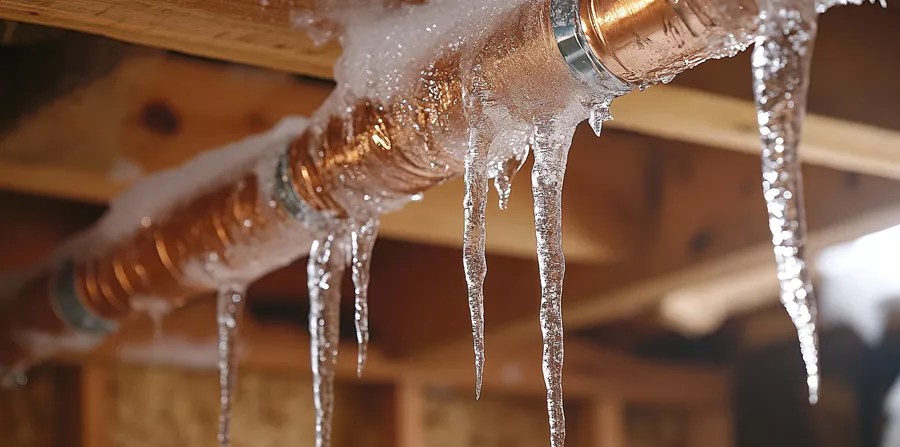
    When water freezes, it expands. This expansion can create internal pressure within a pipe, particularly in rigid materials like copper or CPVC. The damage often occurs at weak points — fittings, joints, or small imperfections that may have existed long before winter arrived.

    When temperatures rise and the ice begins to melt, water flow resumes — and that’s when a compromised pipe can suddenly release water under pressure.

    The result is often not a slow drip, but a rapid and significant leak.


    What Inspectors Commonly Observe in Vermont Homes

    During winter inspections across Vermont, several recurring patterns emerge:

    1. Plumbing Installed in Exterior Walls

    This is perhaps the most common risk factor. Even when insulation is present, extreme cold can penetrate deeply enough to affect pipes.

    2. Air Leakage Around Penetrations

    Small gaps around wiring, plumbing penetrations, or rim joists allow cold air to infiltrate. These invisible pathways can dramatically lower localized temperatures.

    3. Inadequate Insulation Coverage

    Insulation that is compressed, missing, or improperly installed often creates cold pockets where pipes are vulnerable.

    4. Seasonal or Vacant Homes

    Unoccupied properties are particularly at risk when heating systems fail or temperatures are set too low.


    Warning Signs That a Pipe May Be Freezing

    Frozen pipes rarely announce themselves dramatically at first. Instead, early indicators tend to be subtle:

    • Reduced water flow from a fixture
    • Frost visible on exposed piping
    • Unusual odors from drains (caused by ice blocking vent flow)
    • Unexplained drops in indoor temperatures near plumbing lines

    Recognizing these signs early can make the difference between a manageable situation and a major water damage event.


    Prevention: A Matter of Heat, Air, and Awareness

    Effective prevention focuses on maintaining stable temperatures and reducing cold air exposure.

    Key protective measures include:

    • Keeping indoor temperatures consistent, even when away
    • Sealing air gaps around pipes and penetrations
    • Adding insulation in vulnerable areas
    • Allowing warm air circulation inside cabinets on exterior walls
    • Disconnecting and draining exterior hose bibs before winter

    In particularly vulnerable situations, homeowners may also choose to install heat tape or pipe insulation sleeves — though these should be installed and monitored carefully to avoid fire risks.


    The Vermont Context: Why This Matters Here

    Freeze-thaw cycles in Vermont are not just frequent — they are intense. Temperatures can swing dramatically within short periods, placing repeated stress on plumbing systems.

    This makes frozen pipe prevention not merely a matter of convenience, but a critical component of protecting a home’s structural integrity and long-term value.

    Water damage from burst pipes remains one of the most expensive and disruptive issues homeowners face during winter months.


    A Final Perspective

    Homes are dynamic systems, constantly interacting with their environment. Winter, in particular, acts as a kind of stress test — revealing weaknesses that might otherwise go unnoticed.

    Frozen pipes are not simply the result of cold weather. They are a signal that heat, airflow, and insulation within the home have fallen out of balance.

    Understanding this broader context allows homeowners to move beyond reactive fixes and toward proactive stewardship — ensuring their homes remain resilient against the quiet but persistent pressures of Vermont winters.

  • Practical Ways to Keep Your Home Warm as Temperatures Plunge

    Practical Ways to Keep Your Home Warm as Temperatures Plunge

    Tonight, Vermont is expected to see the coldest temperatures of the season—an abrupt reminder that winter still has plenty of strength left. When the mercury drops this far, the cold stops being a background condition and becomes something you can almost feel pressing against the walls. Nights like this reveal how well our homes hold heat, how prepared our systems are, and how small oversights can ripple into bigger problems.

    But extreme cold doesn’t have to catch you off guard. With a few well-timed steps, you can help your home stay warm, stable, and efficient through the night. What follows are grounded, practical measures—nothing alarmist, nothing theoretical. Just the things that make the biggest difference when the cold settles in and stays awhile.


    1. Lock In Heat Before the Temperature Plummets

    Tonight’s cold will search for the tiniest escape routes.
    Warmth is lost in places we rarely look: around windows, under doors, through attic hatches, and around plumbing penetrations.

    Before the temperature bottoms out:

    • Check exterior doors for drafts and reinforce with fresh weatherstripping if needed.
    • Close and lock windows to ensure a tight seal—a simple, often overlooked step.
    • Cover drafty windows with insulating plastic or heavy curtains.

    Think of this as tightening your home’s thermal envelope right as winter tries its hardest to break through.


    2. Give Your Home a Heat-Holding Advantage

    Insulation is quiet, invisible, and absolutely crucial on nights like this. Heat rises, and the attic is the first place it tries to leave.

    A quick evening check can help keep that warmth where you need it:

    • Confirm that attic access panels close fully and sit flat.
    • Ensure insulation hasn’t shifted, especially near rooflines or eaves.
    • Close off unused rooms to concentrate heat in the living spaces you’re relying on tonight.

    This is the structural equivalent of putting on an extra layer before heading outside.


    3. Set Your Heating System Up for Success

    When temperatures drop sharply, your heating equipment works harder than at any other time. Giving it a small amount of attention now can carry you through the coldest hours of the night.

    • Replace or clean furnace filters to improve airflow and efficiency.
    • Make sure heat-pump outdoor units are clear of snow and ice.
    • Verify fuel levels—cold snaps accelerate consumption.
    • Keep vents and radiators unobstructed so heat can circulate freely.

    Your heating system doesn’t need perfection—it needs a clear path to operate without strain.


    4. Protect Plumbing From Freezing Overnight

    Extreme cold can freeze pipes faster than most homeowners expect, especially in marginally insulated areas.

    To reduce that risk:

    • Open kitchen and bathroom cabinet doors to let warm air reach supply lines.
    • Let vulnerable faucets drip lightly; moving water resists freezing.
    • Know the location of your main shut-off valve in case a pipe does freeze.

    Think of plumbing as a system that thrives on circulation and warmth. Tonight, both matter more than usual.


    5. Use Curtains and Blinds as Thermal Tools

    When used intentionally, window coverings become part of your heating strategy.

    • Open curtains during the day to collect solar heat.
    • Close them before sunset to trap that heat during the coldest hours.
    • For older windows, add a rolled towel or draft snake along the sill for extra protection.

    These small steps create a meaningful buffer against the radiant cold creeping in from the glass.


    6. Prepare for the Possibility of Overnight Power Issues

    Extreme low temperatures and snow-laden branches can strain power lines. While outages aren’t guaranteed, tonight’s weather makes them more likely.

    A few simple preparations go a long way:

    • Make sure flashlights, lanterns, and portable chargers are ready.
    • Verify that carbon monoxide detectors have fresh batteries.
    • If you have a safe alternative heat source (like a wood stove), ensure it’s ready for use.

    A calm, prepared home stays comfortable even when the unexpected happens.


    7. Keep Vents and Exhaust Clear as Snow Accumulates

    Combustion appliances require uninterrupted airflow. During heavy snow and wind, vents can become blocked without you noticing.

    Before settling in for the night:

    • Check that furnace, boiler, and dryer vents are fully clear.
    • Ensure the heat pump has space around it to breathe.
    • Watch for unusual system shutdowns or odors—both can signal airflow issues.

    These are simple, high-impact checks, especially when temperatures drop into the danger zone.


    8. Lean Into the Natural Movement of Heat

    Warm air rises, pools, shifts, and escapes. A few small adjustments help keep it where it matters:

    • Set ceiling fans to low, reverse to gently push warm air back down.
    • Close doors to unused rooms, especially those without heat sources.
    • Keep hallways open to allow even distribution of warmth.

    You’re not forcing anything—you’re aligning your home with the physics of warmth.


    Final Thoughts

    Tonight’s cold is the kind that defines a season. But a well-prepared home doesn’t just endure it—it handles it with quiet resilience. These steps aren’t complicated, yet each plays a role in helping your home retain warmth, protect its systems, and stay comfortable through the deepest part of the night.

    If you’d like help evaluating your home’s winter readiness or understanding how cold affects its systems, Green Mountain Property Inspections is here to support you with clear, evidence-based guidance tailored to Vermont homes.

    Stay warm, stay prepared, and let your home meet the cold with confidence.