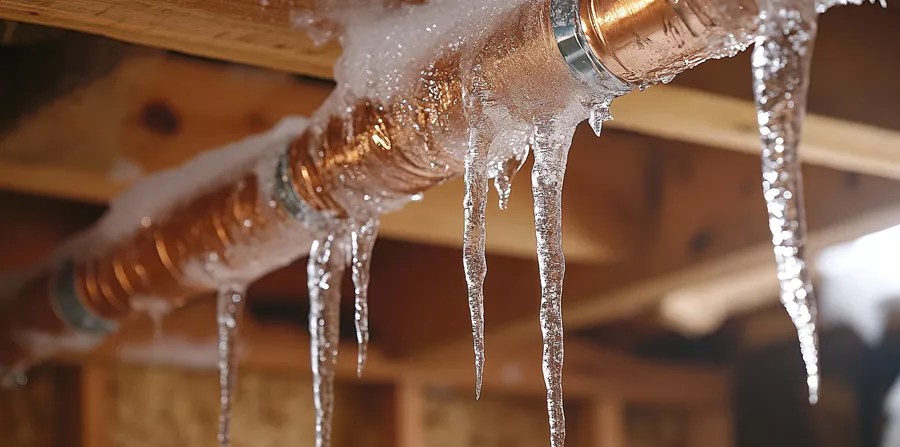
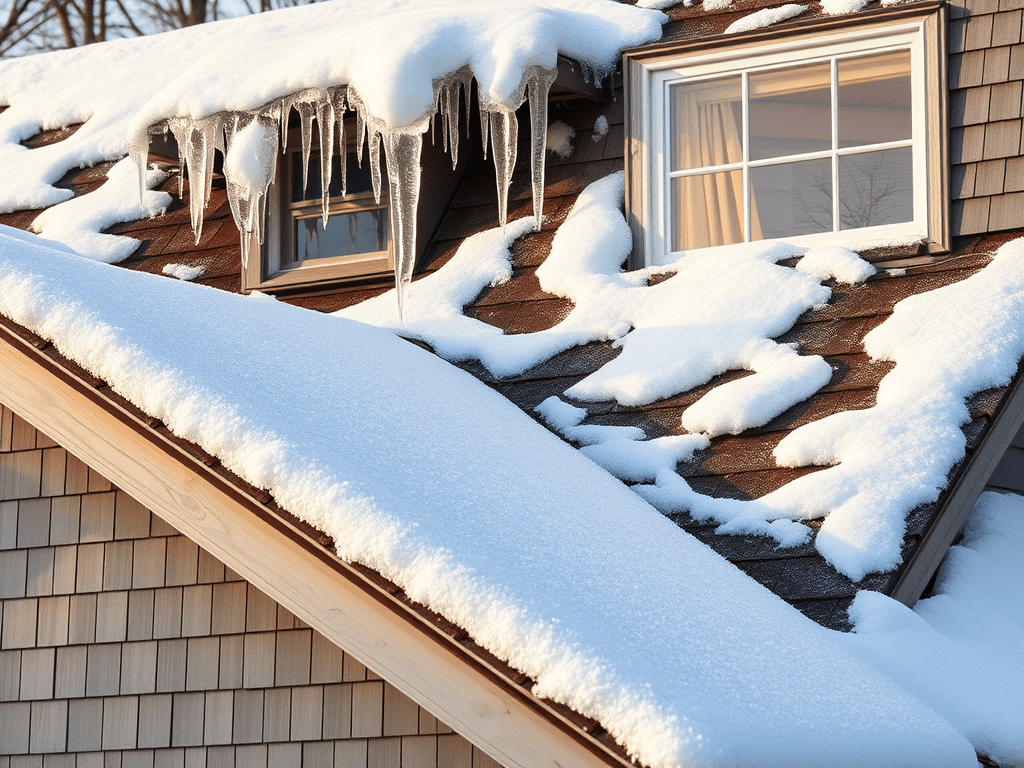
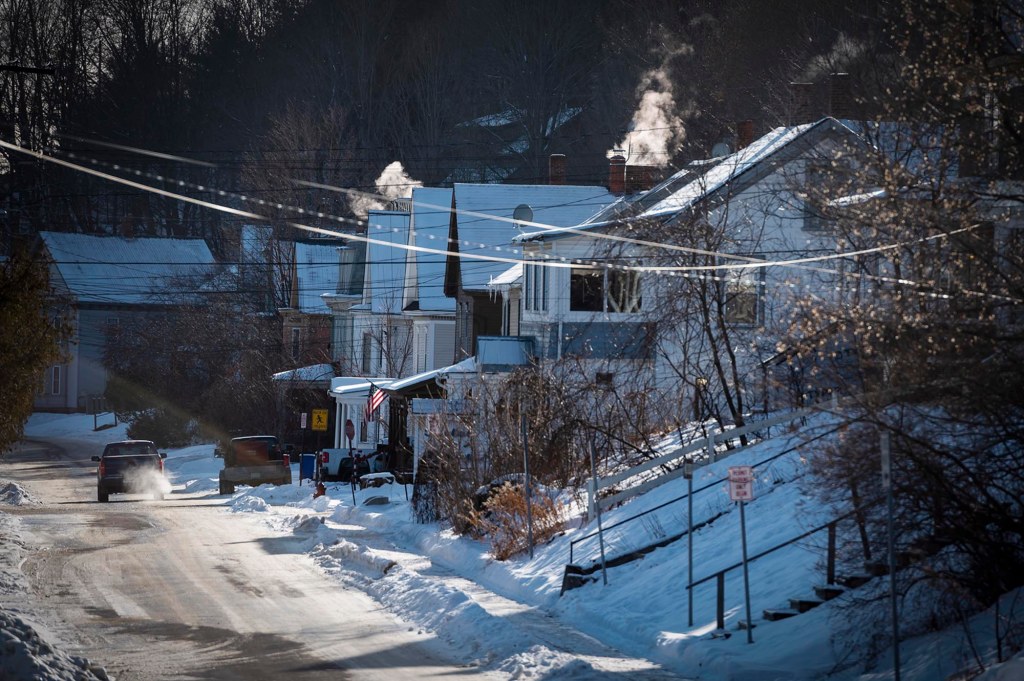
Winter in Vermont has a way of revealing truths about a home that remain hidden the rest of the year. Beneath the quiet beauty of snow-covered roofs and frost-lined trees, the forces of physics are at work — expanding, contracting, testing every seam, joint, and vulnerability in a structure.
One of the most common and costly consequences of this seasonal stress is frozen plumbing.
To understand why frozen pipes occur — and why they can be so destructive — it helps to look beyond the symptom and examine the underlying conditions that make them possible.
Why Pipes Freeze: It’s Not Just About Temperature
At first glance, frozen pipes seem straightforward: temperatures drop below freezing, water turns to ice, and problems follow.
But in practice, the situation is more nuanced.
Pipes freeze not simply because it’s cold outside, but because heat loss within the home outpaces the ability of the structure to maintain safe temperatures around the plumbing system. This typically occurs in areas where insulation, airflow, and building design intersect in unintended ways.
Common vulnerable locations include:
- Exterior walls lacking sufficient insulation
- Unheated basements or crawlspaces
- Attics where plumbing lines were routed during renovations
- Garage ceilings with plumbing above
- Cabinets along exterior walls, particularly under kitchen sinks
In Vermont homes — especially older ones — plumbing was sometimes installed during eras when energy standards were less rigorous. As a result, pipes may sit closer to exterior surfaces than modern building science would recommend.
The Real Risk: It’s Not the Ice
Contrary to popular belief, pipes rarely burst at the moment they freeze.
The true hazard occurs during thawing.
When water freezes, it expands. This expansion can create internal pressure within a pipe, particularly in rigid materials like copper or CPVC. The damage often occurs at weak points — fittings, joints, or small imperfections that may have existed long before winter arrived.
When temperatures rise and the ice begins to melt, water flow resumes — and that’s when a compromised pipe can suddenly release water under pressure.
The result is often not a slow drip, but a rapid and significant leak.
What Inspectors Commonly Observe in Vermont Homes
During winter inspections across Vermont, several recurring patterns emerge:
1. Plumbing Installed in Exterior Walls
This is perhaps the most common risk factor. Even when insulation is present, extreme cold can penetrate deeply enough to affect pipes.
2. Air Leakage Around Penetrations
Small gaps around wiring, plumbing penetrations, or rim joists allow cold air to infiltrate. These invisible pathways can dramatically lower localized temperatures.
3. Inadequate Insulation Coverage
Insulation that is compressed, missing, or improperly installed often creates cold pockets where pipes are vulnerable.
4. Seasonal or Vacant Homes
Unoccupied properties are particularly at risk when heating systems fail or temperatures are set too low.
Warning Signs That a Pipe May Be Freezing
Frozen pipes rarely announce themselves dramatically at first. Instead, early indicators tend to be subtle:
- Reduced water flow from a fixture
- Frost visible on exposed piping
- Unusual odors from drains (caused by ice blocking vent flow)
- Unexplained drops in indoor temperatures near plumbing lines
Recognizing these signs early can make the difference between a manageable situation and a major water damage event.
Prevention: A Matter of Heat, Air, and Awareness
Effective prevention focuses on maintaining stable temperatures and reducing cold air exposure.
Key protective measures include:
- Keeping indoor temperatures consistent, even when away
- Sealing air gaps around pipes and penetrations
- Adding insulation in vulnerable areas
- Allowing warm air circulation inside cabinets on exterior walls
- Disconnecting and draining exterior hose bibs before winter
In particularly vulnerable situations, homeowners may also choose to install heat tape or pipe insulation sleeves — though these should be installed and monitored carefully to avoid fire risks.
The Vermont Context: Why This Matters Here
Freeze-thaw cycles in Vermont are not just frequent — they are intense. Temperatures can swing dramatically within short periods, placing repeated stress on plumbing systems.
This makes frozen pipe prevention not merely a matter of convenience, but a critical component of protecting a home’s structural integrity and long-term value.
Water damage from burst pipes remains one of the most expensive and disruptive issues homeowners face during winter months.
A Final Perspective
Homes are dynamic systems, constantly interacting with their environment. Winter, in particular, acts as a kind of stress test — revealing weaknesses that might otherwise go unnoticed.
Frozen pipes are not simply the result of cold weather. They are a signal that heat, airflow, and insulation within the home have fallen out of balance.
Understanding this broader context allows homeowners to move beyond reactive fixes and toward proactive stewardship — ensuring their homes remain resilient against the quiet but persistent pressures of Vermont winters.
 The Inspector's Notebook