Blog

  • A Day in the Life of a Home Inspector: Behind the Scenes of Vermont’s Unsung Guardians

    A Day in the Life of a Home Inspector: Behind the Scenes of Vermont’s Unsung Guardians

    It’s 6:30 a.m. in Northern Vermont. The mist is still rising off the pastures, and the coffee in my thermos is just hitting the sweet spot between too hot to sip and not worth sipping. This is the quiet moment before the work begins—a time to take stock of the day ahead, sharpen my mindset, and remind myself why I do what I do.

    Home inspection is part science, part storytelling. It’s not about passing or failing a house. It’s about interpreting the clues a structure leaves behind and giving people the knowledge to make confident decisions. Each inspection is an unfolding narrative—one told in roof lines, foundation walls, rust stains, flickering lights, and occasionally, the unmistakable evidence of a determined mouse.

    8:00 a.m. – The First Inspection

    My first stop today is a 1920s colonial on the edge of St. Albans. It’s charming, no doubt, but charm doesn’t carry joist loads or insulate attics. I park, gear up, and greet the buyer—a young couple moving up from Montpelier. They’re excited, and rightly so. This is a big step.

    As I step into the home, I start my process: exterior first. Roofing, siding, grading, drainage. Then the mechanical systems. Furnace, electrical panel, plumbing distribution, insulation—everything tells a story. Some stories whisper, others shout. Today, the boiler is whispering. It’s oversized and short cycling. That’s a note to make: not a defect, but a performance concern worth watching.

    11:15 a.m. – Document, Photograph, Educate

    Throughout the inspection, I’m taking notes—yes, for the report, but also for the people. It’s one thing to identify an issue. It’s another to explain it in a way that makes sense to a first-time buyer without sending them into a panic spiral.

    For example, a GFCI that doesn’t trip isn’t a reason to walk away from a house. It’s a $20 fix. But I don’t gloss over it. I explain the function, the risk, and how to resolve it. My job isn’t just to inspect. It’s to inform without alarm, to highlight without hyperbole.

    1:00 p.m. – Drive, Lunch, and Decompress

    Between inspections, I reset. Grab lunch, respond to emails, and update my software. Sometimes I review images or moisture readings. Sometimes I call a client to walk them through their report from the day before. The work doesn’t stop when the tools go back in the bag.

    3:30 p.m. – Wrap-Up and Report Writing

    By the time I return home, I’m tracking more than dirt on my boots. I’m carrying hours of data, photos, observations, and narratives. Now comes the writing—my favorite part.

    The inspection report isn’t just documentation. It’s a map for the client. I build it defect by defect, with clean structure: a clear title, an honest narrative, and a specific recommendation. No fluff. No scare tactics. Just facts, findings, and a path forward.

    The Quiet Satisfaction

    Some days it’s cold. Some days it’s pouring. Some days I crawl through cobwebbed crawlspaces that feel like something out of a Stephen King novel. But every day, I get to help someone understand their investment, protect their future, and sleep a little better that night.

    That’s why I do it.

    Because at the heart of every inspection is a family, a dream, and a roof they hope will hold. And I take that seriously.


    Interested in what a professional inspection might reveal about your home or the one you’re about to buy?
    Visit www.greenmountainpropertyinspections.com for scheduling, FAQs, and insights from the field.

    Your property. My priority.
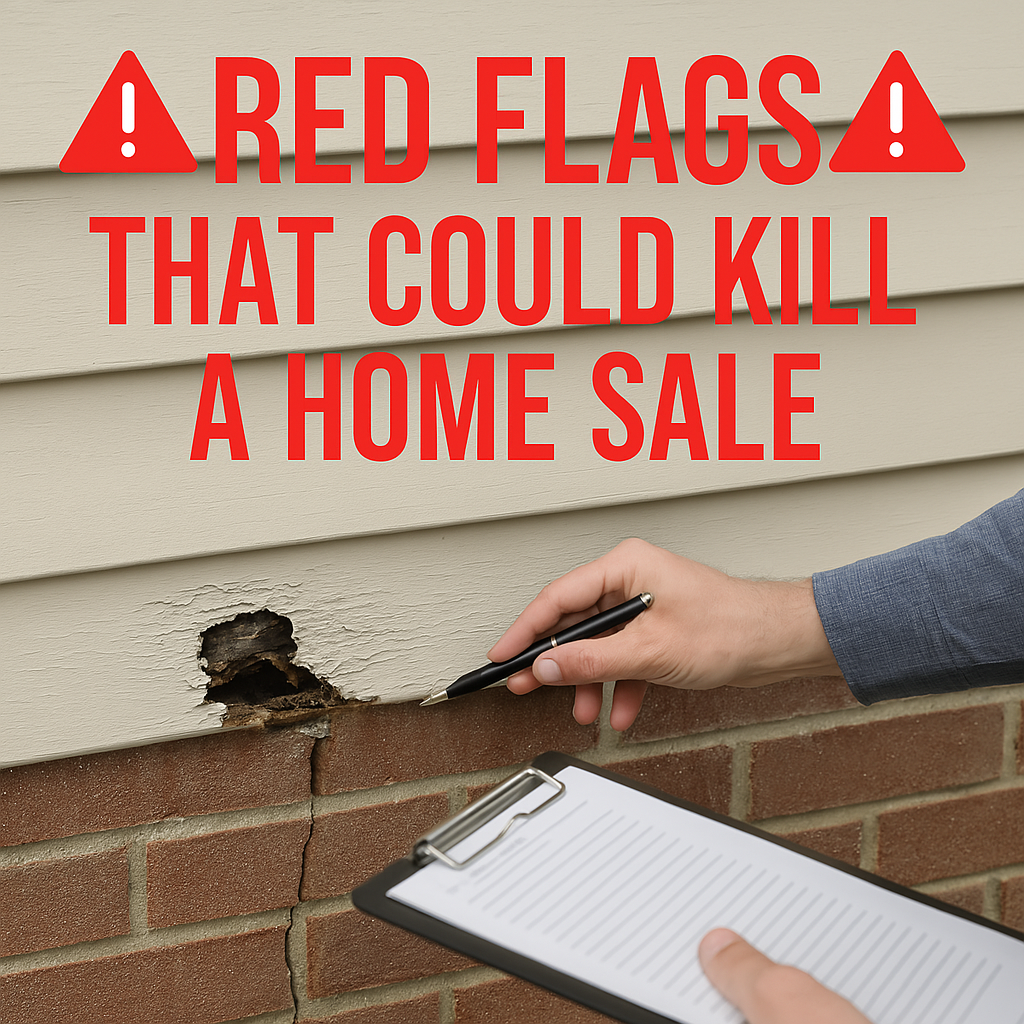
  • 🚩 Red Flags That Could Kill a Home Sale

    When buyers walk through a home, they’re envisioning where the couch might go, which room gets the best light, and whether the kitchen backsplash clashes with their air fryer.

    But as a licensed home inspector, my focus is a little different.
    I’m looking for the red flags—the ones that don’t show up in the listing photos or open house walkthroughs. The kind that, once discovered, can delay closing… or kill the deal entirely.

    Whether you’re selling, buying, or representing clients in either role, here are three of the most common deal-breakers I find during inspections—and why they matter.


    1. Structural Damage: The Foundation of the Problem

    Cracked foundations, sagging floors, and bowing basement walls aren’t just cosmetic concerns—they signal instability. And once buyers hear words like “settlement,” “piering,” or “structural engineer,” they often get cold feet (or ask for major concessions).

    What to look for:

    • Horizontal cracks in foundation walls
    • Uneven floors or door frames that no longer square
    • Water intrusion near support beams

    Why it matters:
    Structural issues usually come with high price tags—and higher buyer anxiety.


    2. Roofing Problems: When It’s More Than Just Shingles

    The roof is one of the most expensive systems to repair or replace, and a poor roof can lead to hidden water damage, mold, and insulation breakdown. If a buyer learns mid-deal that the roof has five years (or less) of life left, they may renegotiate—or walk.

    What to look for:

    • Curling or missing shingles
    • Visible sagging
    • Leaks in attic or ceiling stains

    Why it matters:
    It’s not just the cost—it’s the uncertainty. No buyer wants to inherit a ticking time bomb over their heads.


    3. Active Plumbing Leaks: Small Drips, Big Problems

    A slow leak under the kitchen sink may seem minor. But if there’s evidence of ongoing water damage—like rotted cabinetry, mold growth, or warped floors—it raises questions about maintenance and what else might be lurking beneath the surface.

    What to look for:

    • Water stains on ceilings or walls
    • Musty smells in bathrooms, basements, or under sinks
    • Active dripping from pipes or fixtures

    Why it matters:
    Leaks signal neglect—and water damage can be deceptively expensive to remediate.


    Final Thoughts: Protect the Deal by Getting Ahead

    These red flags don’t have to end a sale—but they can if they’re discovered late. The earlier they’re addressed, the more control everyone has over how to respond.

    That’s why I always recommend pre-listing inspections for sellers and thorough buyer inspections before closing. These small investments often prevent major delays, last-minute negotiations, or deals falling apart altogether.

    After all, selling or buying a home is stressful enough. You shouldn’t have to gamble on what’s hidden behind the drywall.

    📩 Ready to uncover what’s really going on with your property?
    Schedule your inspection today, and walk into closing with confidence.

  • 🧠 Myth-Busting: Home Inspections vs. Appraisals

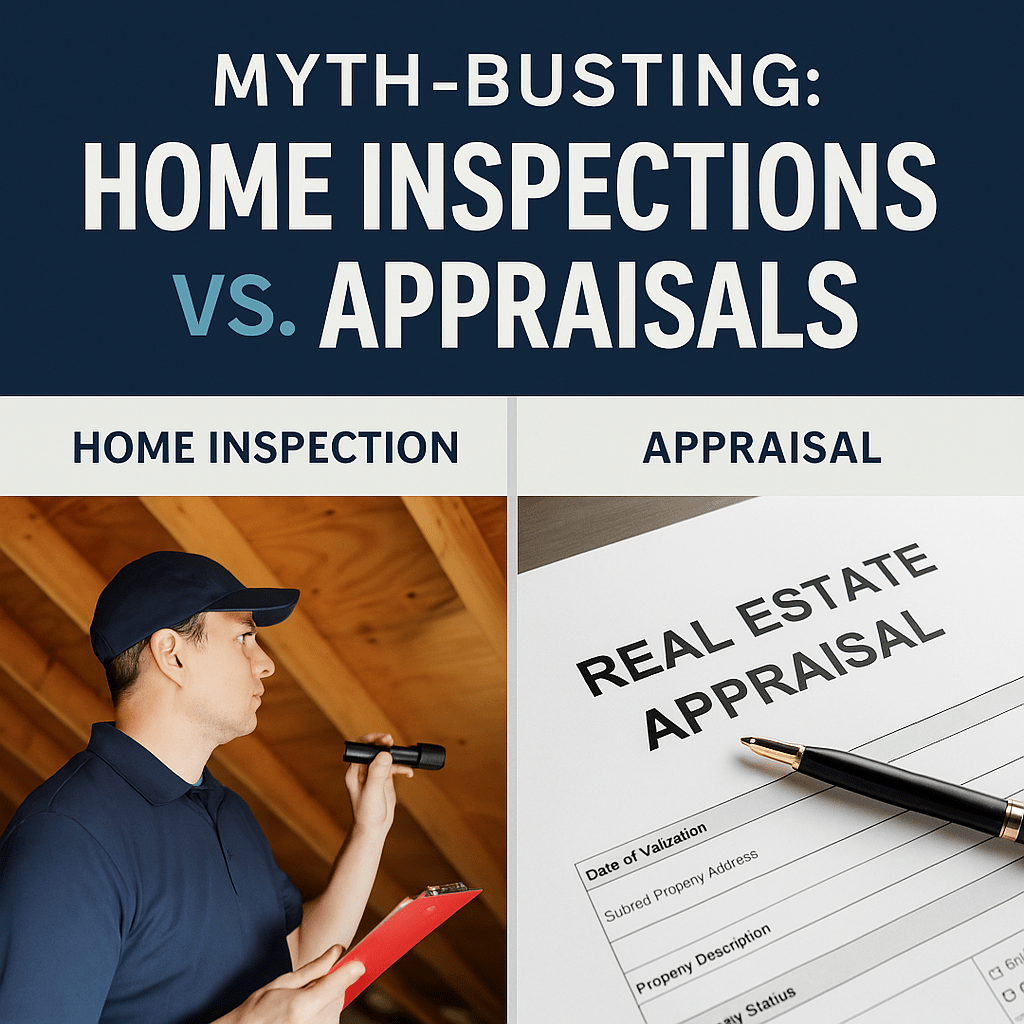
    🧠 Myth-Busting: Home Inspections vs. Appraisals

    In the complex ritual of real estate transactions, there’s a persistent and costly myth that continues to muddy the waters: the idea that a home inspection and a home appraisal are somehow interchangeable.

    They’re not.
    Not even close.
    And confusing the two can leave buyers and sellers exposed in ways that only become obvious after the ink dries.

    As someone who’s walked thousands of roofs, tested GFCIs in crawlspaces, and dug into more attics than I can count, I want to clear this up—because clarity isn’t just helpful. It’s essential.


    🔍 What a Home Inspection Actually Is

    A home inspection is an in-depth, physical examination of a property’s condition, conducted by someone who knows where the weak points are—and how to explain them.

    It’s about truth, not value.

    We’re looking for:

    • Water intrusion behind walls.
    • Roofs nearing the end of their lifespan.
    • Outdated electrical panels that can’t safely handle modern demand.
    • Evidence of deferred maintenance that’s invisible during a showing.

    The goal?
    To arm buyers (or sellers) with knowledge. So they can make informed decisions, negotiate effectively, or walk away with confidence if needed.


    💰 What an Appraisal Actually Is

    An appraisal is a valuation tool for lenders. It’s not about safety, functionality, or even accuracy in terms of what a buyer will encounter once they move in.

    It’s a math problem, not a microscope.
    Appraisers evaluate the market value based on:

    • Comparable recent sales.
    • Square footage.
    • Location and basic property features.

    They don’t go in attics.
    They don’t test outlets.
    They don’t pull permits or check for foundation cracks.

    And they’re not meant to.


    🤝 Why the Distinction Matters

    Here’s the crux:
    A clean appraisal doesn’t mean the house is in good condition.
    It simply means a lender is comfortable issuing a loan based on market value.

    But it’s you, the buyer, who has to live with the consequences of a cracked foundation, missing insulation, or aging plumbing.

    I’ve seen buyers waive inspections because “the house appraised well.”
    And I’ve seen the fallout—ranging from minor fixes to major financial regret.

    Let me be clear: Only one of these protects you.


    Final Thought

    If you’re serious about buying smart—or selling with transparency—you need both tools in your corner. The appraisal keeps your lender happy. The inspection keeps you safe.

    Confusing the two is like assuming a car’s resale value tells you if the brakes work.

    Knowledge is leverage. And in real estate, leverage is everything.
    Let’s use it wisely.


    📨 Curious what a modern inspection report looks like?
    Message me—I’ll send you a sample.

    #HomeInspection #RealEstateMyths #AppraisalVsInspection #HomeBuying #PropertyInspector #SmartDecisions