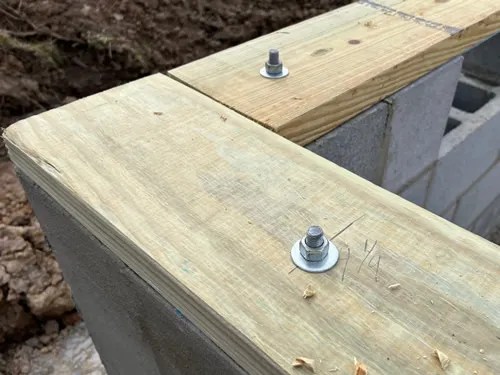
In the hidden architecture of a safe home, not all heroes are visible. Beneath the drywall and between the studs lies a fundamental layer of security—one that quietly bears the weight of storms, seismic shifts, and seasonal stress. We’re talking about foundation anchor bolts and sill plate protocols, two of the most underappreciated but essential components of structural integrity.
As a home inspector walking the line between craftsmanship and code, I see these details not as trivia—but as sentinels. Let’s explore why they matter, and what every homeowner, buyer, or builder should know.
The Silent Connection Between Home and Earth
The sill plate is the wooden framing member that rests directly on top of a home’s foundation wall. It’s the first point of contact between the house and the concrete that holds it upright. But contact isn’t enough—connection is everything.
That’s where anchor bolts come in.
Anchor bolts (often J-bolts or wedge anchors) are used to fasten the sill plate securely to the foundation. Their purpose? To prevent lateral movement, uplift, or separation during events like high winds, earthquakes, or even the shifting of freeze-thaw cycles. Without them—or if they’re improperly installed—a home’s entire structural shell becomes vulnerable to shifting forces.
Installation Protocols: What the Code Requires
According to the InterNACHI guidelines, which align closely with the International Residential Code (IRC), anchor bolts should:
- Be at least ½ inch in diameter
- Extend a minimum of 7 inches into the concrete
- Be spaced no more than 6 feet apart
- Have at least two bolts per plate, with one placed within 12 inches of the end of each piece
Additional guidelines call for properly sized washers and nuts, and critically—tight connections that aren’t overly compressed, cracked, or corroded. Improper spacing, loose connections, or missing bolts can dramatically reduce the shear resistance of the structure.
Common Issues Found in the Field
In my inspections across Vermont, I’ve encountered a range of concerns—some minor, others more sobering:
- Anchor bolts hidden by finished basements, preventing inspection
- Plates installed over insulation rather than directly on the foundation
- Missing or undersized bolts, particularly in older homes
- Signs of rot or insect damage compromising the sill plate itself
- Galvanic corrosion on bolts near moisture-prone areas
Each of these defects, while seemingly small, points to potential points of failure if not addressed.
Modern Reinforcement for Legacy Homes
For older homes without anchor bolts, retrofitting is possible—and often recommended in seismically active areas. Simpson Strong-Tie and similar companies manufacture retrofit plates and bolts designed for easy integration into existing foundations. While not required in all jurisdictions, proactive reinforcement can be the difference between a home that shifts, and one that stands its ground.
The Takeaway
In the grand design of a home, it’s easy to get distracted by open concepts, updated kitchens, and energy-efficient windows. But a truly secure home starts at the perimeter—with solid, code-compliant anchor bolts and a properly installed sill plate.
At Green Mountain Property Inspections, I don’t just look for what’s visible—I dig into what holds it all together. Because when the wind blows and the frost heaves, you want to be sure your home is connected, secured, and ready for what nature throws its way.
Want to learn more?
Check out the original article that inspired this blog post:
🔗 Foundation Anchor Bolts and Sill Plate Protocols – InterNACHI
 The Inspector's Notebook