
Tag: preexisting inspection

  • The Hidden Economy in Your Walls: 10 Simple Ways to Cut Energy Waste at Home

    The Hidden Economy in Your Walls: 10 Simple Ways to Cut Energy Waste at Home

    Welcome (back) to The Inspector’s Notebook—where practical insight meets long-term thinking. Whether you’re a longtime homeowner, a first-time buyer, or just someone who wants to better understand the place you live, this blog is here to help you see your home through a sharper lens. Our goal? Help you live smarter, safer, and more sustainably—without the noise.


    What if I told you your home is quietly bleeding money? Not through theft or disaster—but through inefficiency.

    Every flick of a light switch, every moment your furnace hums to life, and every unnoticed draft is part of a quiet equation most people never see. Fortunately, solving this equation doesn’t require massive lifestyle change—just awareness and small, strategic action.

    Here are ten easy, proven ways to save money and energy in your home—backed by building science and wrapped in common sense.


    1. Don’t Heat the Whole Neighborhood

    Air leaks are silent budget thieves. Gaps around windows, doors, and attic hatches allow your heated or cooled air to escape. Seal them with weatherstripping or caulk. The best energy savings aren’t glamorous—they’re hidden in the details.


    2. Let Your Thermostat Think for You

    Programmable or smart thermostats reduce heating and cooling costs by adjusting to your schedule—even when you forget. Just a few degrees of difference can translate into real savings over time, without sacrificing comfort.


    3. Rethink Water Heating

    Tankless water heaters only heat what you use, when you use it. No more paying to keep 40 gallons warm while you’re at work. They cost more upfront, but pay for themselves in efficiency—especially in homes that use moderate to high amounts of hot water.


    4. Change Your Bulbs, Change Your Bill

    Incandescent bulbs are like tiny space heaters that also happen to give off light. LEDs, on the other hand, sip electricity while lasting 25 times longer. Replacing just a few high-use bulbs can lead to noticeable monthly savings.


    5. Use Fans with Purpose

    Ceiling fans don’t cool the air—they move it. In the summer, this helps you feel cooler at a higher thermostat setting. In the winter, reversing the blade direction circulates warm air downward. It’s physics working for you, not against you.


    6. Insulate Like You Mean It

    Most heat loss occurs through the attic and walls. If your insulation is sparse, compressed, or missing entirely in spots, your heating system has to work harder. More work means more fuel. More fuel means more money—out of your pocket.


    7. Fix the Small Leaks

    A dripping hot water faucet doesn’t just waste water—it wastes the energy used to heat that water. Low-flow fixtures and timely repairs reduce the loss at both ends of the equation.


    8. Unplug the Energy Vampires

    Devices plugged in but not in use still draw power. It’s called “phantom load.” Power strips with kill switches make it easy to cut the cord when you’re not actively using electronics.


    9. Get Strategic with Landscaping

    Deciduous trees can shade your home in summer and let in sunlight during the winter. Plant them on the west and south sides of your home and you’ll use less energy to control the temperature indoors—all through the natural rhythms of the seasons.


    10. Get a Home Energy Audit

    Want the blueprint? A professional energy audit will show you exactly where your home is underperforming and how to fix it. It’s not guesswork—it’s science applied to your walls, windows, ducts, and systems.


    The Bottom Line

    Your home is a machine. And like any machine, it works best when its parts are aligned, clean, and not working harder than they need to. Saving energy isn’t just good for your wallet—it’s a quiet form of resilience. A way to protect yourself from volatility. A step toward independence.

    Efficiency isn’t just about using less—it’s about living smarter.


    If you’d like help understanding where your home could be saving more, Green Mountain Property Inspections offers energy-aware home inspections and can connect you with trusted professionals. It all starts with seeing your home for what it is—and what it could be.
  • How Green Mnt. Property Inspections Can Help You Protect Your Biggest Investment — And Why We’re Different

    How Green Mnt. Property Inspections Can Help You Protect Your Biggest Investment — And Why We’re Different

    Welcome to The Inspector’s Notebook
    If this is your first time here, welcome — we’re glad you found us. The Inspector’s Notebook is a space where clarity meets insight. We break down the unseen systems, overlooked risks, and quiet details that can make or break your home investment. Whether you’re a first-time buyer, a seasoned investor, or a real estate professional, this blog offers field-tested advice, grounded in years of real-world experience, for navigating the complexities of property ownership. Our goal is simple: to bring peace of mind through clarity.


    How We Help You Protect Your Biggest Investment

    Let’s be honest — buying a home is one of the most emotionally charged financial decisions you’ll ever make. Beneath the freshly painted walls and the gleam of stainless appliances is an infrastructure that either supports your dream… or slowly erodes it.

    That’s where we come in. At Green Mnt. Property Inspections, we don’t just “look around.” We interrogate the systems that hold your home together. We inspect with the mindset of an advocate — someone who understands building science, sees what others miss, and helps you see it too, without the noise.

    From foundations and framing to wiring, ventilation, and drainage, we assess each component in context. Our reports are built not just to flag issues, but to help you make smart, confident decisions about your next move — whether that means requesting repairs, renegotiating, or simply walking away.


    What Makes Green Mnt. Different?

    In a saturated field, it’s not enough to be certified or to carry tools — it’s about how we think. And more importantly, how we serve.

    • We separate defects from data. Every report distinguishes between “nice to know” and “need to act.” No scare tactics. No filler. Just practical, actionable insight.
    • We prioritize clarity over complexity. If you can’t understand your inspection report, it’s not serving you. We write with one goal: make the invisible visible — and simple.
    • We show up like you matter. Because you do. We take the time to answer your questions, walk you through the process, and make sure you feel supported before, during, and after the inspection.
    • We come from a background in building trades, fire safety, and emergency services. That means we’re not just trained to spot issues — we understand risk in a way most inspectors don’t.
    • We follow InterNACHI’s highest standards. This isn’t just a job to us. It’s a responsibility. And we treat it that way.

    Final Thought: Clarity Is the Real Value

    Most homebuyers don’t regret what they knew — they regret what they didn’t. At Green Mnt. Property Inspections, we believe the best investment protection is information — clear, calm, and delivered by someone who works for you.

    Thanks for reading The Inspector’s Notebook. If you found this useful, stick around — we post regular updates on home safety, inspection tips, and ways to stay ahead of costly surprises.

    Your home should give you peace of mind — not uncertainty. Let’s keep it that way.


    Want to schedule an inspection or ask a question?
    Visit greenmountainpropertyinspections.com or reach out directly. We’re here to help — with integrity, precision, and a Vermont work ethic you can count on.

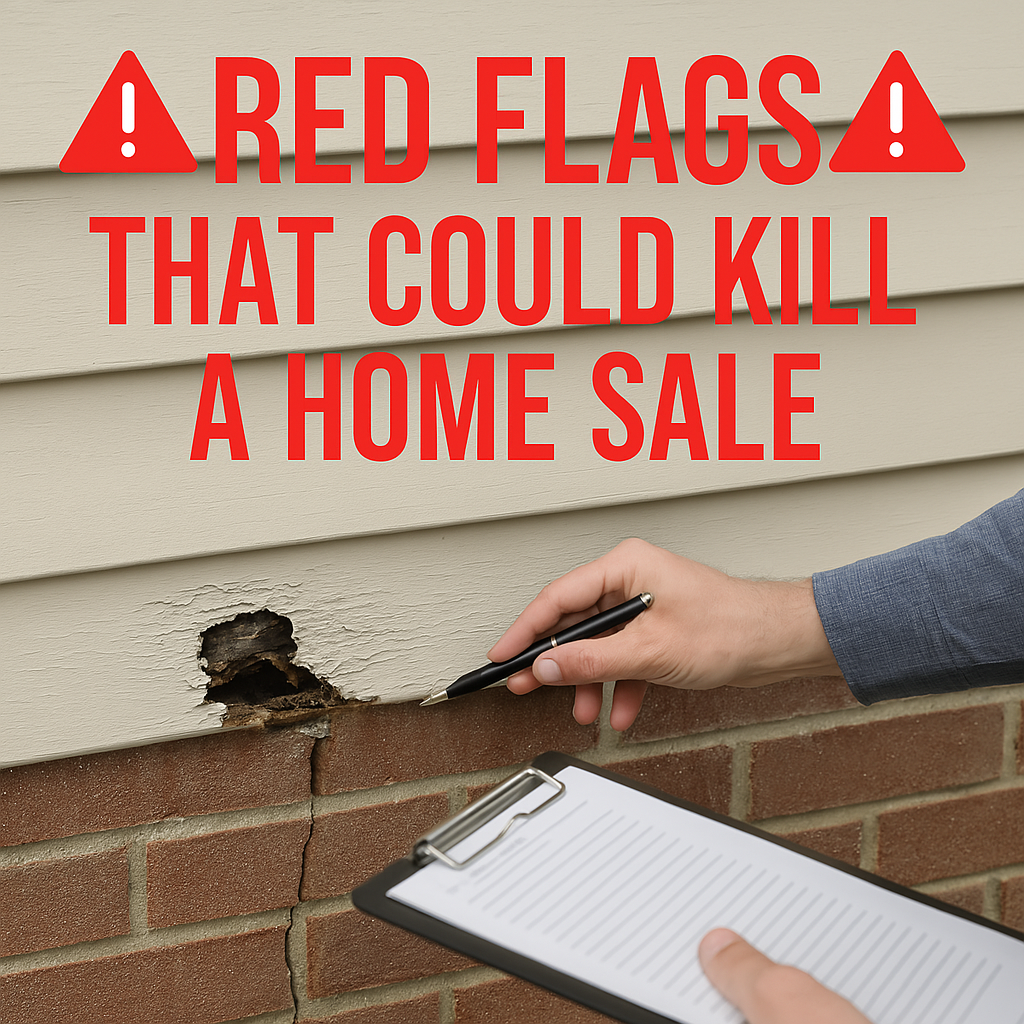
  • 🚩 Red Flags That Could Kill a Home Sale

    When buyers walk through a home, they’re envisioning where the couch might go, which room gets the best light, and whether the kitchen backsplash clashes with their air fryer.

    But as a licensed home inspector, my focus is a little different.
    I’m looking for the red flags—the ones that don’t show up in the listing photos or open house walkthroughs. The kind that, once discovered, can delay closing… or kill the deal entirely.

    Whether you’re selling, buying, or representing clients in either role, here are three of the most common deal-breakers I find during inspections—and why they matter.


    1. Structural Damage: The Foundation of the Problem

    Cracked foundations, sagging floors, and bowing basement walls aren’t just cosmetic concerns—they signal instability. And once buyers hear words like “settlement,” “piering,” or “structural engineer,” they often get cold feet (or ask for major concessions).

    What to look for:

    • Horizontal cracks in foundation walls
    • Uneven floors or door frames that no longer square
    • Water intrusion near support beams

    Why it matters:
    Structural issues usually come with high price tags—and higher buyer anxiety.


    2. Roofing Problems: When It’s More Than Just Shingles

    The roof is one of the most expensive systems to repair or replace, and a poor roof can lead to hidden water damage, mold, and insulation breakdown. If a buyer learns mid-deal that the roof has five years (or less) of life left, they may renegotiate—or walk.

    What to look for:

    • Curling or missing shingles
    • Visible sagging
    • Leaks in attic or ceiling stains

    Why it matters:
    It’s not just the cost—it’s the uncertainty. No buyer wants to inherit a ticking time bomb over their heads.


    3. Active Plumbing Leaks: Small Drips, Big Problems

    A slow leak under the kitchen sink may seem minor. But if there’s evidence of ongoing water damage—like rotted cabinetry, mold growth, or warped floors—it raises questions about maintenance and what else might be lurking beneath the surface.

    What to look for:

    • Water stains on ceilings or walls
    • Musty smells in bathrooms, basements, or under sinks
    • Active dripping from pipes or fixtures

    Why it matters:
    Leaks signal neglect—and water damage can be deceptively expensive to remediate.


    Final Thoughts: Protect the Deal by Getting Ahead

    These red flags don’t have to end a sale—but they can if they’re discovered late. The earlier they’re addressed, the more control everyone has over how to respond.

    That’s why I always recommend pre-listing inspections for sellers and thorough buyer inspections before closing. These small investments often prevent major delays, last-minute negotiations, or deals falling apart altogether.

    After all, selling or buying a home is stressful enough. You shouldn’t have to gamble on what’s hidden behind the drywall.

    📩 Ready to uncover what’s really going on with your property?
    Schedule your inspection today, and walk into closing with confidence.